Saturday, September 8, 2012

Super Drive-In Monsterrama, 2012 - Night 1

The annual weekend retro horror festival at the Riverside Drive-In in Vandergrift, PA is halfway over with, and last night's lineup was a blast from the groovy past.  The weather held off from raining, although a strange combination of warm and cool breezes kept swelling up around us, and the usual faint mist that drifted over the place only helped to enhance the atmosphere. In the snack bar, the usual vendors had an assortment of horror themed DVDs, magazines, t-shirts, and plastic models for sale. I spotted George Reis of DVD Drive-In there, as well as Tom Savini holding court in the snack bar during one of the intermissions.


First up was "Theatre of Blood", that classic Vincent Price flick where he plays Edward Lionheart, an actor scorned by the circle of local theater critics who refuse to give him positive reviews for his Shakespearean performances. After an incident at an awards ceremony, where a lesser known actor is honored for his accomplishments instead of him, Lionheart appears to commit suicide in front of the critics as they relax at a private party. A year after the incident, the critics start to die in gruesome ways, each of them patterned after the works of Shakespeare, and Lionheart seems to have returned from the grave to exact revenge upon them.

The gimmick itself is very similar to "The Abominable Dr. Phibes", although without the elaborate makeup. This time, Price seems to be going a little meta, and the character seems to be referring to Price as an actor whom critics refuse to take seriously. The death scenes are just as camp as the Dr. Phibes films, with the creepiest being the first one, where Price's ragtag group of "actors"--actually a small community of vagrants who fished him out of the river where he committed suicide--descend on a critic and slash him to death with broken bottles and other sharp implements on the Ides of March, just like Julius Caesar. Price also met his wife, Coral Browne, on the set of this film, where he disguises himself as an ultra camp gay hairdresser and murders her by electrocuting her under a blow drier.


"Horror House" is a dull 1969 film about which the less said, the better. It starts out alright, with a bunch of swinging English young people deciding to make a visit to an abandoned "haunted" house The most interesting thing about this movie to me was the late 60s visual style it has, although Frankie Avalon looks like he's still stuck in the late 50s. A few knife-attack murders are boringly staged, and by the end of the film, the whodunit mystery of the movie has become secondary to another burning question: "When is this goddamned movie going to end?"

Much more fun is "Equinox", another film I'd never seen until last night. Made as a student film project in 1970, it features a primitive "Evil Dead" scenario where a group of four young people are summoned to a professor's cabin in the woods, where they discover the professor has unleashed a demon by reading from a cursed book.  The minions of hell torment them in an effort to gain control of the book, and the fate of the world (presumably) hangs in the balance, EEEEE! Although the movie is crude and amateurish, it features some impressive monsters in it, including a stop-motion giant and a winged demon that appears at the climax of the film.

The final feature was the notorious "Son of Blob", aka "Beware! The Blob", a 1972 blob sequel directed by none other than Larry Hagman, and featuring cameos from numerous 1970s TV and movie personalities, including Cindy Williams, Burgess Meredith, Dick Van Patten, Carol Lynley, Godfrey Cambridge, and in the strangest cameo, Christian rock musician Randy Stonehill, who appears as a pot-smoking hippie who gets eaten by the blob while singing a song about cocaine in a storm drain with Cindy Williams. Also appearing is Richard Stahl, a character actor whose name you probably don't recognize but whose face you definitely would if you were watching TV at all in the 60s, 70s, or 80s.  Finally, the gorgeous Marlene Clark appears in a brief role in the movie, she who appeared in 70s genre classics like "Ganja & Hess" and "Night of the Cobra Woman".  She gets eaten by the blob real early in the film though, and whenever I see this movie I always wish she had at least a few more scenes.

In between all of the movies, the festival features numerous vintage horror trailers, as well as snack bar advertisements from various decades of the era of drive-in theaters. The programmers also usually show a Three Stooges short, which is the one aspect of the festival I wish would just go away for good. I hate the Three Stooges, and for one I'd rather have the length of a Stooges short shaved off the end of the entire festival so that it didn't end at 5 in the morning. This year's Stooges piece, however, was a bizarre World War II era short that featured them mocking Hitler, so it at least had a weird appeal for about sixty seconds.

But hey, how can I complain too much about a festival like The Super Drive-In Monsterrama?? I'm headed back there tonight for the second part!


Even a blurry screen cap of Cushing is worth including!


Friday, September 7, 2012

Straight On Till Morning (1972)


1972 was a banner year for movies about naive young women looking for love and finding it with a deranged serial killer.  And by "banner year", I mean I can think of two.  One of them is "The Folks at Red Wolf Inn", and now I've discovered another one.  "Straight on Till Morning" doesn't have any cannibalism, but it does feature a similar scenario of a somewhat childish young lady who wanders right into some psychopathic shenanigans and doesn't even realize it until it's way out of control.

Strangely, "Straight on Till Morning" is a Hammer film, yet it has nothing of what one would expect from a Hammer film--no Count Dracula, no spooky castle, no Christopher Lee, not even a single damn cameo for Peter Cushing. The studio must have been trying to evolve, as it was starting to leave period films behind and even began setting its Dracula films in contemporary times (this was the year of  "Dracula A.D. 1972"). I still wonder if they knew what they were getting into when they greenlit "Straight on Till Morning", which not only avoids the tone and visual tropes of most horror films, but also has the most ADHD visual style that I've ever seen outside of a Russ Meyer film. The director, Peter Collinson, frequently layers two or more scenes and then cuts back and forth between them in short bursts of dialog and visuals,  resulting in a fragmented narrative. The effect is strangely disorienting at best, and fucking irritating at worst. It's almost as if Collinson just assumed you'd be either stoned, tripping, or both when you saw this movie in a theater in 1972, and he decided to mess with your mind by twisting it and then trying to bend it into the shape of a soft pretzel.

Getting comfortable in this movie's world is out of the question, so the beginning of the film can be a bit of a mystery to the first time viewer. From what I was able to piece together later in the film, Brenda (Rita Tushingham) is a young woman living with her mother in a part of England that resembles a large prison complex, with no visible plant life anywhere. She is a little bit wacky, writing stories where she is a princess and is rescued by a handsome prince. She tells her mother she is pregnant, and because she's pregnant she must leave home and go to find a suitable father for her child. I'm not quite sure what sense this made at the time, but it turns out it doesn't matter--Brenda's not pregnant at all. After flying the coop, she insinuates herself into the local party scene and starts living with a young woman named Caroline (Katya Wyeth).
"So like, I was thinking, I just can't help feeling like I'm stuck in a 70s nightmare, man!"
Despite her best efforts, the plain-looking Brenda can't get any real attention from anybody with a penis, so she resorts to doing what any other young woman who wants to get pregnant would do: she kidnaps a man's dog, with the intention to bathe it, pretty it up, and return it to him as a means of making his acquaintance.  Unfortunately for her, the man is Peter (Shane Briant), who happens to be a serial killer. It seems that Peter is also looking for love, it's just that he has a problem with pretty things: he kills them. When Brenda shows up at his door with his dog, he sees through her little ruse and gets her to admit right away that she wants to have a baby with him. Kind of like hiring a new maid, Peter tells her she can move in as long as she does all the cooking and cleaning, and we'll see about that baby. Oh, and he doesn't really know who she is, since she gives him a phony name and he decides to make up his own and call her Wendy. Since Wendy/Brenda's "not pretty", maybe she has a chance of being the love of Peter's life.

"Straight on Till Morning" is clearly not playing with a full deck. It's more like a demented romance, where strange motivations drive the characters in ways that are hard to relate to. Even though it doesn't make much sense, I really got into the way the story unfolded. The lack of any real graphic violence doesn't do anything to diminish the uncomfortable atmosphere the film generates, especially in the scene where Peter brutally kills his dog, which Brenda has unwittingly "ruined" by making it pretty. Flashbacks to Peter's other women reveal that he's done this many times before, which leads me to wonder where the hell he's getting rid of these bodies, and how the walls in his row house must be completely soundproof to mask all that screaming. Peter's homicidally crazy, but Brenda is a little crazy, too, so the lurid quality of the film is like watching two unstable people who are living in a fantasy world.

I wasn't certain if the downbeat story arc and twisted subject matter alone would make me consider "Straight on Till Morning" a 70s Doom film, but I knew for sure when I heard that title ballad on the soundtrack--YES, an actual 70s Doom song! There's also the crazy editing, which is either arty or eye-gougingly annoying, take your pick, but there's some interesting cinematography to look at. The outdoor city settings are bleak, and Collinson likes to film his subjects as far removed from nature as possible. You get the impression that the film's world is a never-ending wasteland of concrete, cookie cutter buildings, where only the interiors have any character at all. "Straight on Till Morning" is like an oddball person on the bus who sits next to you and starts talking whether you want like it or not. It invaded my space and made me uncomfortable at first, but I caught myself actually listening and wondering where the hell it was talking about.
"So tell me, that flag in the background--is someone in this far-out flat a member of the Bear community?"

Monday, August 27, 2012

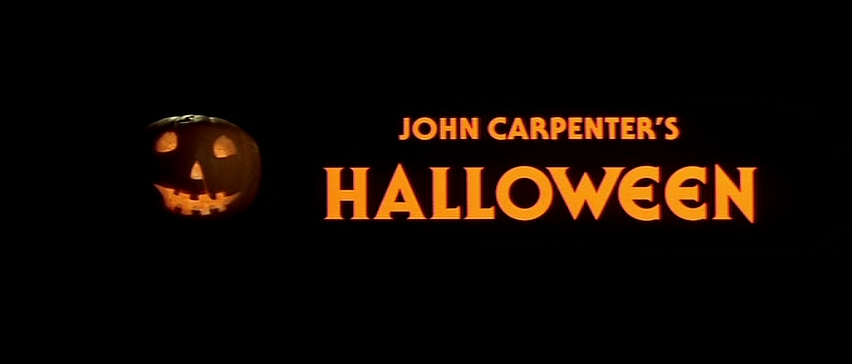
Halloween (1978)


"Halloween" is one of those inescapable cultural institutions that everyone knows about even if they've never seen it. A true surprise runaway box office hit, its success spawned a never-ending series of horror movies that inundated the 1980s in a sea of slashers, so much so that it's difficult to imagine there was ever a time before "Halloween". But I am old enough to have lived there, and I know some of you remember it, too. In 1978, there had already been a few movies in my memory that made people line up around the block to see them, and made our parents talk about them in hushed tones. "The Exorcist" was one of them, a movie that made so many people lose their shit, even when it was sanitized and broadcast on TV I was forbidden to watch it. "Jaws" was another, and I have distinct memories of that one, my aunt reading scary passages of the book to my mom, and both of them having to explain to me that sharks were real and they did eat people. I was already a rabid fan of "monster movies" at age 8, when "Halloween" began to gather a reputation as being a movie to scare the piss out of you. I saw scary trailers for it on TV, but it was really all the talk at school that made me anxious to see it. It was more than a movie, it was an event. I remember cutting ads out of the newspaper in hopes someone would get the hint, but my mom sure as hell wasn't gonna take me to see "Halloween"--she eventually did see it, and she was scared to death of it--and I didn't have anybody else over the age of 17 to take me to an R-rated movie.

Eventually HBO ran the movie and I got my chance. It was either October 1979 or 1980. My dad had HBO, so I made damn sure I had plans to stay at his house the weekend "Halloween" premiered. Even better, he and his wife were out for the night, leaving me and my six year old sister with two teenage girls as babysitters. Funny how that movie, showing on a 1970s TV set, could scare the hell out of us so bad. I didn't understand anything at the time about how John Carpenter made the film, I just remember all of us screaming. A lot. I was still young enough to only have a vague idea of how movies were made--for all I knew, movies were actual magic. Horror movies tweaked us so easily as kids because we were still at that place where fantasy and creativity went hand in hand, and we believed anything was possible. All it really took was some scary music, a villain, and an appealing protagonist, and any movie could be terrifying. "Halloween" had all of those things and more.

It's the "more" that keeps us talking about the movie today, decades after it was made. Carpenter's little independent movie, made for about $300,000, pushed all the right buttons without being cheap. Sure, anybody could make a movie where loud noises and sudden hands on shoulders startle the audience, and he does that enough in "Halloween". I remember Laurie bumping into Sheriff Brackett in broad daylight as being one of the biggest scares. But that's not the meat of the movie, it's just Carpenter toying with you. For every jump scare, there are also lengthy sequences where terror keeps building and building, and there's nothing cheap about the way it's photographed or presented to the audience. "Halloween" is sly, and it doesn't want to just startle you for the price of admission, it wants to scare the hell out of you.

The scenes where Laurie discovers the bodies of her friends are a series of agonizing frames where the director keeps us unsure of where the danger is. Laurie and The Shape (the geeky, insider way to refer to Michael Myers) are rarely in the same frame at the same time. There's one spooky moment where they are: Laurie stumbles out into the hallway in shock, and in a dark doorframe behind her, you see the deathly white mask slowly materialize out of pitch black, and he lunges at her with a knife. The shots are static, too; although there are a number of handheld camera pans elsewhere in the film, the chase scenes show frantic movement within stationary frames, and almost never with both characters in the same shot, so you never really know how close the killer is to catching up with Laurie. It's a subtle thing that creates a lot of tension. Without it, "Halloween" wouldn't be worth watching more than once, not after you already know when the killer will jump out at the victims. But even when you know it's coming, Carpenter's game is so enjoyable, you have to keep coming back to it.

"What's wire hangers doing in this closet when I told you, no...wire...hangers...EVER!??"

The cinematography in "Halloween" has a lot to do with its artistry, too. The script itself isn't pretentious--even with the melodramatic speeches written for Donald Pleasance, their context in the movie isn't entirely serious--but the way the movie looks is high quality stuff for a low budget movie. More than one critic, either armchair or professional, has commented about how Carpenter's work here resembles Hitchcock. This fanboy, however, sees more influence from the Italians. The nighttime scenes are often bathed in ultra blue lights, and who could forget the startling murder where a young man winds up pinned to a door and left hanging there, stiffly upright? The overall composition is very reminiscent of a murder in Mario Bava's "Twitch of the Death Nerve", where a character is impaled to a wall by a spear. "Halloween" also recalls Bava in the breathtaking camera tricks that enhance the film rather than distract from it; the very first scene is a lengthy first-person camera tracking shot that seems to be unbroken (Carpenter has admitted it technically is not a single take, with a cut existing during the momentary screen blackout when the killer reaches out and dons a mask). I think people mention Hitchcock simply because "Halloween" is actually a good movie.

It's important to take "Halloween" on its own terms and not in association with the series that followed, especially the 1981 sequel. Don't get me wrong, I love "Halloween II". But the real power of "Halloween" comes from the idea that something evil comes after Laurie and her friends, for no reason at all, and without any explanation. There is no motivation for Michael Myers to escape from the sanitarium and commit a series of murders, it's just Laurie's unfortunate luck that he notices her. He's not her long-lost brother, out to finish a knife job on her because of who she is, he is simply the Boogey Man.
Something the sequels almost completely forgot was the killer's childlike playfulness, which made him even more scary. He was a psycho stalking people with a butcher knife, and yet he took the time to wear a sheet like a ghost and put Bob's glasses over it, toying with Lynda before strangling her. At any moment he could have just barged in there with a knife and finished her off, but he wanted to play with her first. It's also hard not to see the parallel between a Halloween haunted walk-through attraction and the weird tableau he creates with the bodies, drawing in poor Laurie as the unwitting patron in his haunted house. Carpenter makes an interesting and subtle reference to Michael's bizarre childishness earlier in the film when he shows the two kids Tommy and Lindsey alone watching a horror movie, and Tommy hides behind a curtain to scare Lindsey. This is the same mindset Michael Myers is coming from, except his pranks result in murder.

Finally, I'm posting a link to this brief clip, which is a great example of why I love horror movies and shows what I was talking about with "Halloween" being an event rather than just a movie. It's actual audio from a 1979 screening of the movie that someone captured with a hand held cassette recorder. The person synced it as best he could with the corresponding clip from the film, and it's good enough to demonstrate the experience of seeing it when it was fresh and the shocks were still new, accompanied by an audience full of screaming people.


Thursday, August 9, 2012

Invasion of the Body Snatchers (1978)


So, pretend I just told you there's this new horror movie coming out. It's gonna be a big budget film by a major studio, it's gonna be rated PG, and on top of all those things...it's a remake. Yeah, you'd probably think right away "That's gonna suck like a rolling one-balled Dyson." Well, you'd probably be right, unless you were talking about Philip Kaufman's 1978 "Invasion of the Body Snatchers": a PG-rated, big-budget horror movie that just happens to be a remake, too. It's hard for me to talk about "Invasion of the Body Snatchers," simply because there's so much to it that I love.  The actors, the cinematography, the script, the special effects, even the sound design, are all superlative. But most importantly, it's a total 70s Doom movie, and it kicks some major pod.


The bizarre opening sets the tone of this movie perfectly, with strange alien landscapes and psychedelic images of the alien "seeds" drifting through space toward Earth. At the end of their bad trip, the seeds come sailing down into a rainy San Francisco in a brilliantly edited first person camera sequence, landing on other plants like parasites and blooming with strange flowers.  Elizabeth Driscoll (Brooke Adams) and Matthew Bennell (Donald Sutherland) are two Health Department employees who start to see signs of trouble after Elizabeth brings one of the weird flowers into her home and discovers her dentist boyfriend, Geoffrey, acting strange the next day.  Elizabeth becomes convinced Geoffrey is an imposter after she follows him around and sees him behaving strangely, meeting a series of diverse strangers in secret and trading unidentified parcels with them.  Meanwhile, Matthew's wacky friends Jack and Nancy Bellicec (Jeff Goldblum and Veronica Cartwright) find a featureless body in one of the stalls of their mud bath business.  Pretty soon, the four of them are well aware that San Francisco is silently being decimated by alien vegetation that likes to duplicate other life forms in a grotesque process that gives birth to a clone and reduces the original--us--to a pile of lifeless dust. Perhaps worst of all, the pods attack when we're at our most defenseless: while we're sleeping. Unfortunately for them, our heroes don't truly catch on until they're being relentlessly pursued for being human by the rest of San Francisco, who seem to have all fallen victim to the insidious pods.

"But what I really want to know is, where did they go to the bathroom on the Enterprise?"
The story trades the original's undercurrent of Communist paranoia for a distinctly 70s fear of losing one's identity in a time when people were starting to come to terms with their differences more and more. The sexual revolution, the evolution of psychology, the empowerment of women, the strides of the civil rights movement, all of these things are suddenly erased by the arrival of a simple form of plant life that is able to perfectly recreate our bodies, but not our souls. Instead, the pod people are portrayed as lifeless carbon copies of human beings, not because they don't understand emotions, but because they can't be bothered; they have no passion, and therefore no conflict. David Kibner, a psychiatrist played by none other than Leonard Nimoy, is one of the only characters in the film that could have been an alien pod from the beginning. After we're sure he's a pod, he gives a chilling explanation to Matthew and Elizabeth that their deaths in the conversion will simply be a transition to a new form of life where love and hate have no meaning anymore. Nancy Bellicec is the first to figure out how to fool them by simply hiding her emotions, giving her the ability to disguise herself as one of them.


All of the actors are essential here. Jeff Goldblum's character is irritatingly combative, an obvious ploy to make it all the more unnerving when he becomes a conformist pod person. Veronica Cartwright does another great supporting role, spouting alien conspiracy gibberish that nevertheless gives her an advantage over the pods. She's able to easily accept what's happening, and she understands it a lot sooner than the other characters do. She's even able to keep herself alive all the way to the end, despite the fact that she seems to be completely on her own by that time. But a lot of the movie is grounded in Donald Sutherland and Brooke Adams; Elizabeth's transformation is the emotional payoff to the entire film, the perfect demonstration of the threat of the horror of the pods. Elizabeth is a little spacey, but we like her from the very beginning. When she finally succumbs to the need to sleep, a horrifying scene occurs where Matthew finds her and tries to revive her, only to feel her body collapse into a lifeless husk right in his very arms. Before he can even scream, the "new" Elizabeth speaks to him from behind, standing nude among some tall, reedy grass. She somehow has none of the real Elizabeth's appeal, something that is made even more disturbing because she's nude. We've spent the whole movie invested in Elizabeth's escape, and we suddenly see her literally stripped, of both her clothes and her humanity.  When she appears shortly afterwards in a crowd of pod people, none of them acknowledge that a beautiful woman is completely nude among them.  It's one of the great moments in horror cinema.


Another huge payoff is the unforgettable conclusion of the film, probably the thing that most people remember about "Invasion of the Body Snatchers". The film breaks visual contact with Matthew during a lapse in time, and suddenly we're not sure about him. Matthew goes through the motions of his daily routine at work, where he also encounters Elizabeth. They disregard one another completely, and it's not clear if Matthew is pretending. Finally, Matthew walks down a tree-lined street and is approached by Nancy, who is clearly still human. She excitedly rushes up to him, only to have him erupt in the shrill, inhuman shriek of the pod people, screaming and pointing at her. Even though you know it may be coming, like Nancy, you want to believe Matthew survived and is still human, and it's horrifying when it happens. I know a lot of people had to have pissed themselves the first time they saw that, because I know I sure did.


Upping its 70s Doom cred is the fact that "IOTBS" is pretty nasty for a PG rated movie. At one point, Sutherland uses a garden hoe to hack open the head of his own incomplete alien clone. The aforementioned dog-human pod abortion is both hilarious and horrifying to behold, and Brooke Adams' nude scene is pretty much full frontal and way up front.  There was a lot you could get away with in a PG movie in that era!

I can really get lost in the way this movie is photographed. "Invasion of the Body Snatchers" and "Halloween" seem similar to me when it comes to their cinematography. "IOTBS" has a much higher budget, of course, and it has more elaborate sets, but when it's indoors it reminds me a lot of Dean Cundey's work in "Halloween". Kaufman draws you into the movie by using visuals to tell the story, sometimes even more than the dialogue and often completely without it. The composition is stunning at times, obsessed with archetecture and design, as well as ominous closeups. There's a montage where Elizabeth follows her newly-podded boyfriend all over San Francisco, and Kaufman finds a way to make even ordinary things like a bus driving down the street look as if it's taking place in an alternate universe. From the old style interiors of Geoffrey's dental office, she follows him down crowded city streets, and in one especially great scene, she is dwarfed by a long shot depicting two large escalators cutting across the screen. Elizabeth and Geoffrey trade places, she in the foreground with him off in the distance, and then the reverse. Kaufman isn't as over the top as someone like Dario Argento, but rather he makes these unnerving shifts in perspective seem fluid and almost subliminal. The sound design is also important to the film; several of the montage sequences feature low, squelchy synth patterns that gradually go in and out of sync with one another, communicating a sense of frustration and paranoia. One short montage is almost silent, following Matthew's progress down a city street filmed entirely from inside several street-level shop interiors, with ghostly wind chimes sounding.

But it's that nihilistic ending that gets me every time.  The original film had an upbeat conclusion where the film's hero was vindicated and his escape from Podville led him to real human beings who ultimately heeded his warning.  No such luck for this doomy version, where our beloved Veronica Cartwright finds herself all alone and screaming in despair as she's outed as human by someone she was sure she could trust. Even the credit sequence is stark and silent, not even offering the viewer the comfort of an emotional release through music. If the threat to our bodies gives the pods a sense of dread, so does the emotional implication of losing yourself.

...because clocks are pretty groovy when you think about it...