Monday, August 27, 2012

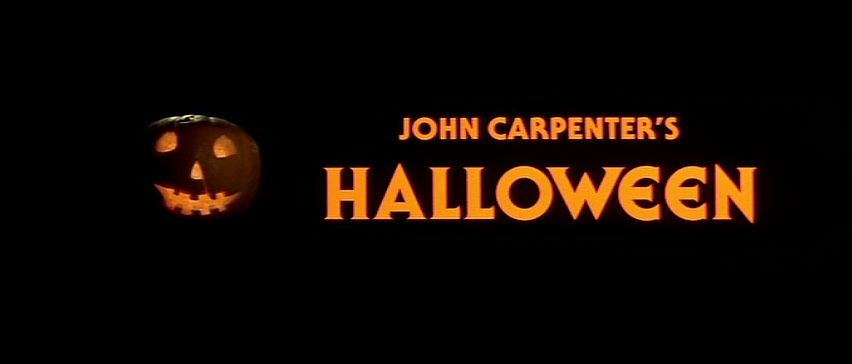
Halloween (1978)


"Halloween" is one of those inescapable cultural institutions that everyone knows about even if they've never seen it. A true surprise runaway box office hit, its success spawned a never-ending series of horror movies that inundated the 1980s in a sea of slashers, so much so that it's difficult to imagine there was ever a time before "Halloween". But I am old enough to have lived there, and I know some of you remember it, too. In 1978, there had already been a few movies in my memory that made people line up around the block to see them, and made our parents talk about them in hushed tones. "The Exorcist" was one of them, a movie that made so many people lose their shit, even when it was sanitized and broadcast on TV I was forbidden to watch it. "Jaws" was another, and I have distinct memories of that one, my aunt reading scary passages of the book to my mom, and both of them having to explain to me that sharks were real and they did eat people. I was already a rabid fan of "monster movies" at age 8, when "Halloween" began to gather a reputation as being a movie to scare the piss out of you. I saw scary trailers for it on TV, but it was really all the talk at school that made me anxious to see it. It was more than a movie, it was an event. I remember cutting ads out of the newspaper in hopes someone would get the hint, but my mom sure as hell wasn't gonna take me to see "Halloween"--she eventually did see it, and she was scared to death of it--and I didn't have anybody else over the age of 17 to take me to an R-rated movie.

Eventually HBO ran the movie and I got my chance. It was either October 1979 or 1980. My dad had HBO, so I made damn sure I had plans to stay at his house the weekend "Halloween" premiered. Even better, he and his wife were out for the night, leaving me and my six year old sister with two teenage girls as babysitters. Funny how that movie, showing on a 1970s TV set, could scare the hell out of us so bad. I didn't understand anything at the time about how John Carpenter made the film, I just remember all of us screaming. A lot. I was still young enough to only have a vague idea of how movies were made--for all I knew, movies were actual magic. Horror movies tweaked us so easily as kids because we were still at that place where fantasy and creativity went hand in hand, and we believed anything was possible. All it really took was some scary music, a villain, and an appealing protagonist, and any movie could be terrifying. "Halloween" had all of those things and more.

It's the "more" that keeps us talking about the movie today, decades after it was made. Carpenter's little independent movie, made for about $300,000, pushed all the right buttons without being cheap. Sure, anybody could make a movie where loud noises and sudden hands on shoulders startle the audience, and he does that enough in "Halloween". I remember Laurie bumping into Sheriff Brackett in broad daylight as being one of the biggest scares. But that's not the meat of the movie, it's just Carpenter toying with you. For every jump scare, there are also lengthy sequences where terror keeps building and building, and there's nothing cheap about the way it's photographed or presented to the audience. "Halloween" is sly, and it doesn't want to just startle you for the price of admission, it wants to scare the hell out of you.

The scenes where Laurie discovers the bodies of her friends are a series of agonizing frames where the director keeps us unsure of where the danger is. Laurie and The Shape (the geeky, insider way to refer to Michael Myers) are rarely in the same frame at the same time. There's one spooky moment where they are: Laurie stumbles out into the hallway in shock, and in a dark doorframe behind her, you see the deathly white mask slowly materialize out of pitch black, and he lunges at her with a knife. The shots are static, too; although there are a number of handheld camera pans elsewhere in the film, the chase scenes show frantic movement within stationary frames, and almost never with both characters in the same shot, so you never really know how close the killer is to catching up with Laurie. It's a subtle thing that creates a lot of tension. Without it, "Halloween" wouldn't be worth watching more than once, not after you already know when the killer will jump out at the victims. But even when you know it's coming, Carpenter's game is so enjoyable, you have to keep coming back to it.

"What's wire hangers doing in this closet when I told you, no...wire...hangers...EVER!??"

The cinematography in "Halloween" has a lot to do with its artistry, too. The script itself isn't pretentious--even with the melodramatic speeches written for Donald Pleasance, their context in the movie isn't entirely serious--but the way the movie looks is high quality stuff for a low budget movie. More than one critic, either armchair or professional, has commented about how Carpenter's work here resembles Hitchcock. This fanboy, however, sees more influence from the Italians. The nighttime scenes are often bathed in ultra blue lights, and who could forget the startling murder where a young man winds up pinned to a door and left hanging there, stiffly upright? The overall composition is very reminiscent of a murder in Mario Bava's "Twitch of the Death Nerve", where a character is impaled to a wall by a spear. "Halloween" also recalls Bava in the breathtaking camera tricks that enhance the film rather than distract from it; the very first scene is a lengthy first-person camera tracking shot that seems to be unbroken (Carpenter has admitted it technically is not a single take, with a cut existing during the momentary screen blackout when the killer reaches out and dons a mask). I think people mention Hitchcock simply because "Halloween" is actually a good movie.

It's important to take "Halloween" on its own terms and not in association with the series that followed, especially the 1981 sequel. Don't get me wrong, I love "Halloween II". But the real power of "Halloween" comes from the idea that something evil comes after Laurie and her friends, for no reason at all, and without any explanation. There is no motivation for Michael Myers to escape from the sanitarium and commit a series of murders, it's just Laurie's unfortunate luck that he notices her. He's not her long-lost brother, out to finish a knife job on her because of who she is, he is simply the Boogey Man.
Something the sequels almost completely forgot was the killer's childlike playfulness, which made him even more scary. He was a psycho stalking people with a butcher knife, and yet he took the time to wear a sheet like a ghost and put Bob's glasses over it, toying with Lynda before strangling her. At any moment he could have just barged in there with a knife and finished her off, but he wanted to play with her first. It's also hard not to see the parallel between a Halloween haunted walk-through attraction and the weird tableau he creates with the bodies, drawing in poor Laurie as the unwitting patron in his haunted house. Carpenter makes an interesting and subtle reference to Michael's bizarre childishness earlier in the film when he shows the two kids Tommy and Lindsey alone watching a horror movie, and Tommy hides behind a curtain to scare Lindsey. This is the same mindset Michael Myers is coming from, except his pranks result in murder.

Finally, I'm posting a link to this brief clip, which is a great example of why I love horror movies and shows what I was talking about with "Halloween" being an event rather than just a movie. It's actual audio from a 1979 screening of the movie that someone captured with a hand held cassette recorder. The person synced it as best he could with the corresponding clip from the film, and it's good enough to demonstrate the experience of seeing it when it was fresh and the shocks were still new, accompanied by an audience full of screaming people.


Thursday, August 9, 2012

Invasion of the Body Snatchers (1978)


So, pretend I just told you there's this new horror movie coming out. It's gonna be a big budget film by a major studio, it's gonna be rated PG, and on top of all those things...it's a remake. Yeah, you'd probably think right away "That's gonna suck like a rolling one-balled Dyson." Well, you'd probably be right, unless you were talking about Philip Kaufman's 1978 "Invasion of the Body Snatchers": a PG-rated, big-budget horror movie that just happens to be a remake, too. It's hard for me to talk about "Invasion of the Body Snatchers," simply because there's so much to it that I love.  The actors, the cinematography, the script, the special effects, even the sound design, are all superlative. But most importantly, it's a total 70s Doom movie, and it kicks some major pod.


The bizarre opening sets the tone of this movie perfectly, with strange alien landscapes and psychedelic images of the alien "seeds" drifting through space toward Earth. At the end of their bad trip, the seeds come sailing down into a rainy San Francisco in a brilliantly edited first person camera sequence, landing on other plants like parasites and blooming with strange flowers.  Elizabeth Driscoll (Brooke Adams) and Matthew Bennell (Donald Sutherland) are two Health Department employees who start to see signs of trouble after Elizabeth brings one of the weird flowers into her home and discovers her dentist boyfriend, Geoffrey, acting strange the next day.  Elizabeth becomes convinced Geoffrey is an imposter after she follows him around and sees him behaving strangely, meeting a series of diverse strangers in secret and trading unidentified parcels with them.  Meanwhile, Matthew's wacky friends Jack and Nancy Bellicec (Jeff Goldblum and Veronica Cartwright) find a featureless body in one of the stalls of their mud bath business.  Pretty soon, the four of them are well aware that San Francisco is silently being decimated by alien vegetation that likes to duplicate other life forms in a grotesque process that gives birth to a clone and reduces the original--us--to a pile of lifeless dust. Perhaps worst of all, the pods attack when we're at our most defenseless: while we're sleeping. Unfortunately for them, our heroes don't truly catch on until they're being relentlessly pursued for being human by the rest of San Francisco, who seem to have all fallen victim to the insidious pods.

"But what I really want to know is, where did they go to the bathroom on the Enterprise?"
The story trades the original's undercurrent of Communist paranoia for a distinctly 70s fear of losing one's identity in a time when people were starting to come to terms with their differences more and more. The sexual revolution, the evolution of psychology, the empowerment of women, the strides of the civil rights movement, all of these things are suddenly erased by the arrival of a simple form of plant life that is able to perfectly recreate our bodies, but not our souls. Instead, the pod people are portrayed as lifeless carbon copies of human beings, not because they don't understand emotions, but because they can't be bothered; they have no passion, and therefore no conflict. David Kibner, a psychiatrist played by none other than Leonard Nimoy, is one of the only characters in the film that could have been an alien pod from the beginning. After we're sure he's a pod, he gives a chilling explanation to Matthew and Elizabeth that their deaths in the conversion will simply be a transition to a new form of life where love and hate have no meaning anymore. Nancy Bellicec is the first to figure out how to fool them by simply hiding her emotions, giving her the ability to disguise herself as one of them.


All of the actors are essential here. Jeff Goldblum's character is irritatingly combative, an obvious ploy to make it all the more unnerving when he becomes a conformist pod person. Veronica Cartwright does another great supporting role, spouting alien conspiracy gibberish that nevertheless gives her an advantage over the pods. She's able to easily accept what's happening, and she understands it a lot sooner than the other characters do. She's even able to keep herself alive all the way to the end, despite the fact that she seems to be completely on her own by that time. But a lot of the movie is grounded in Donald Sutherland and Brooke Adams; Elizabeth's transformation is the emotional payoff to the entire film, the perfect demonstration of the threat of the horror of the pods. Elizabeth is a little spacey, but we like her from the very beginning. When she finally succumbs to the need to sleep, a horrifying scene occurs where Matthew finds her and tries to revive her, only to feel her body collapse into a lifeless husk right in his very arms. Before he can even scream, the "new" Elizabeth speaks to him from behind, standing nude among some tall, reedy grass. She somehow has none of the real Elizabeth's appeal, something that is made even more disturbing because she's nude. We've spent the whole movie invested in Elizabeth's escape, and we suddenly see her literally stripped, of both her clothes and her humanity.  When she appears shortly afterwards in a crowd of pod people, none of them acknowledge that a beautiful woman is completely nude among them.  It's one of the great moments in horror cinema.


Another huge payoff is the unforgettable conclusion of the film, probably the thing that most people remember about "Invasion of the Body Snatchers". The film breaks visual contact with Matthew during a lapse in time, and suddenly we're not sure about him. Matthew goes through the motions of his daily routine at work, where he also encounters Elizabeth. They disregard one another completely, and it's not clear if Matthew is pretending. Finally, Matthew walks down a tree-lined street and is approached by Nancy, who is clearly still human. She excitedly rushes up to him, only to have him erupt in the shrill, inhuman shriek of the pod people, screaming and pointing at her. Even though you know it may be coming, like Nancy, you want to believe Matthew survived and is still human, and it's horrifying when it happens. I know a lot of people had to have pissed themselves the first time they saw that, because I know I sure did.


Upping its 70s Doom cred is the fact that "IOTBS" is pretty nasty for a PG rated movie. At one point, Sutherland uses a garden hoe to hack open the head of his own incomplete alien clone. The aforementioned dog-human pod abortion is both hilarious and horrifying to behold, and Brooke Adams' nude scene is pretty much full frontal and way up front.  There was a lot you could get away with in a PG movie in that era!

I can really get lost in the way this movie is photographed. "Invasion of the Body Snatchers" and "Halloween" seem similar to me when it comes to their cinematography. "IOTBS" has a much higher budget, of course, and it has more elaborate sets, but when it's indoors it reminds me a lot of Dean Cundey's work in "Halloween". Kaufman draws you into the movie by using visuals to tell the story, sometimes even more than the dialogue and often completely without it. The composition is stunning at times, obsessed with archetecture and design, as well as ominous closeups. There's a montage where Elizabeth follows her newly-podded boyfriend all over San Francisco, and Kaufman finds a way to make even ordinary things like a bus driving down the street look as if it's taking place in an alternate universe. From the old style interiors of Geoffrey's dental office, she follows him down crowded city streets, and in one especially great scene, she is dwarfed by a long shot depicting two large escalators cutting across the screen. Elizabeth and Geoffrey trade places, she in the foreground with him off in the distance, and then the reverse. Kaufman isn't as over the top as someone like Dario Argento, but rather he makes these unnerving shifts in perspective seem fluid and almost subliminal. The sound design is also important to the film; several of the montage sequences feature low, squelchy synth patterns that gradually go in and out of sync with one another, communicating a sense of frustration and paranoia. One short montage is almost silent, following Matthew's progress down a city street filmed entirely from inside several street-level shop interiors, with ghostly wind chimes sounding.

But it's that nihilistic ending that gets me every time.  The original film had an upbeat conclusion where the film's hero was vindicated and his escape from Podville led him to real human beings who ultimately heeded his warning.  No such luck for this doomy version, where our beloved Veronica Cartwright finds herself all alone and screaming in despair as she's outed as human by someone she was sure she could trust. Even the credit sequence is stark and silent, not even offering the viewer the comfort of an emotional release through music. If the threat to our bodies gives the pods a sense of dread, so does the emotional implication of losing yourself.

...because clocks are pretty groovy when you think about it...

Friday, July 27, 2012

The Car (1977)


In terms of sheer 70s nostalgia, "The Car" is sure to bring back memories, especially if you had HBO, which ran "The Car" frequently.  While it's rated PG and features very little blood, the existential nature of the script is pure 70s doom, and there are a few shocking moments that probably burned it into the brains of impressionable kids from a (somewhat) more innocent time.


Nikki Newman from Y&R, about to get creamed by The Car!
The small desert town of Santa Ynez, Utah, is visited by evil in the form of a sinister black sedan that drives out of the desert and starts running people over at every opportunity. As the film opens, two perky bike-riding teens get stalked and then smushed when The Car sends one hurtling down a rocky embankment and the other plummeting over the rail of a bridge that leads into a canyon. It then runs over a skeezy hitchhiker two or three times, leaving a wife-abusing moron behind as a witness.  The Santa Ynez police department, featuring James Brolin, has no idea how to deal with a homicidal vehicle that proves to be virtually indestructible. Furthermore, the characters discover what we as the audience have suspected all along: nobody is driving The Car. (SHRIEK!!)
....Home of the Funky Chicken
The thing I think is most amazing about "The Car" is that as absurd as the premise is, the movie does have several moments of giddy terror. The opening murder scene is creepy, especially the orange-tinted views of the victims from inside The Car, and the heartless way it toys with them before sending them screaming over the side of the road. There's a great sequence where The Car attacks a childrens' parade rehearsal, chases the kids and teachers up into a rocky hillside area, and then traps them in a cemetery, where a tense confrontation plays out. Kathleen Lloyd plays James Brolin's girlfriend, Lauren, a schoolteacher. She confronts The Car, which will not enter the boundaries of the cemetery (Ronny Cox later deduces it's because the ground is hallowed). It circles them furiously, revving its engine while Lauren taunts it and hurls things at it. Finally, one of the teachers escapes and summons help, forcing The Car to speed off, but later the most spectacular set piece occurs when it returns to stalk Lauren at her home, racing down her quiet residential street and hurling itself right through her house to kill her in her own living room.


The pained faces of Santa Ynez.

The number of cast members murdered by The Car is relatively high, and given Kathleen Lloyd's position in the cast, not to mention the appealing qualities of her character, it's a huge shock to see her brutally killed in such an unexpected way. Adding to the downbeat, doomy stuff even further is the fact that the script throws a whole lot of serious issues into the mix alongside the killer car, like spousal abuse, alcoholism, and the staggering number of friends and loved ones the main characters lose. It's heavy stuff for a B horror movie.
Let's face it. This guy is scarier than The Car.
A few things rob "The Car" of its potential greatness, mainly the fact that it's a PG-rated movie and it doesn't go very far with its violence or language. I only mention it because there are a few cases where the script seems to call for it, particularly the scene where Lauren hurls insults and curses at The Car. The worst she can summon up is calling the assumed driver of the car a "chicken shit scum of the earth". At least she's not as mild mannered as the teacher who yells "CAT POO!" at The Car as it drives off.  Even worse, the music has dated badly and sounds like something you'd hear in a made-for-TV movie, defusing some of the tense moments.


Lauren goes all badass on The Car.
"Cat poo!"

Old Navajo woman says, "There was no logic in this script." 

The climax of the film features another iconic moment when the surviving heroes manage to lure The Car into a quarry, where a massive dynamite explosion buries it in tons of rock and sand.  A huge fireball looms skyward, and for a moment a vague demonic form appears and screams at them.


What *really* drives The Car!

What does work in "The Car" is good stuff. The acting is often overwrought, and some of the supporting actors don't carry their scenes all that well, but the director seems to know this and keeps the scenes short.  Brolin is good, as is Kathleen Lloyd. Ronny Cox is memorable as a tormented alcoholic cop. Look for Kim and Kyle Richards (those two Real Housewives of Beverly Hills) as Wade's two young daughters. The driving stunts are pretty amazing, especially a barrell roll that results in unfortunate death for four of Santa Ynez's finest. The Car itself is pretty weird looking, custom built by George Barris, with a severely dropped top and glass tinted a sickly yellowish-orange color. I love the way the director only shows it in fragments until the parade scene, where it bursts through a barrier and lands on the roadway, our first full view of it as it starts causing mayhem among a mob of screaming kids and teachers. The sound design is effective too, with the strange whine of the engine and the inappropriately big-sounding horn creating an atomsphere of panic--how many of you drivers have narrowly avoided an accident because someone blared on their horn at the last second? The Car just does it to taunt you before it runs right over you.


"When we're real housewives, we have to do WHAT?!"

Ding dong, Land Car!

This shot is from the end credits, which are sometimes omitted when the film is shown on TV. It leaves no question that The Car is speeding around some other city, just waiting to run over some new victims.


Saturday, March 17, 2012

The Intruder Within (1981): ALIEN drills for oil on TV


I don't know if any of you have ever seen this one movie called "ALIEN"? It was about these blue collar space travelers who were towing a bunch of raw mineral ore back to Earth after mining it from deep space.  Well, along the way they picked up a distress signal...oh, you've heard of this movie before?  Well so have the people who made today's groovy movie "The Intruder Within", which was broadcast on TV in 1981, not too too long after "ALIEN" made a zillion dollars at the box office.  The makers of "The Intruder Within" were definitely out to steal a little of Ridley Scott's thunder.  Actually, the Italians had already made their own "ALIEN" ripoff called "Alien 2: Sulla Terra", about which I will say very little here.  "The Intruder Within" does a slightly better job at creating an actual film out of the material, as opposed to "Alien 2", which seemed designed to create a loosely constructed movie where the title alone could be expected to rake in some money in theaters. 

But whereas "Alien 2" had only the vaguest connection to Ridley Scott's film, "The Intruder Within" makes me feel like if they got ahold of the script of "ALIEN", made a few changes with a red pen, and filmed their movie.  They changed the setting from outer space to an oil rig in the middle of the Southern Ocean off the coast of Antarctica. After some exposition where a young roughneck has a dream that everyone's going to die, we learn that the medical officer on board the rig was hastily replaced by the company (!). Not long after, the oil drill, which has been digging at depths "never before reached", dredges up a series of objects that resemble eggs (!!).  There's also a wormy thing with teeth (!!!) that bites a crew member, who then promptly dies.  Someone touches one of the eggs and gets cut by it; he then goes suicidally crazy.  The sketchy medical officer suspects that the objects are eggs containing an unknown life form (!!!!), and he's willing to risk the lives of the crew members in order to see what happens when the eggs hatch.  After he isolates the eggs in a locked box, one hatches and BURSTS (!!!!!) out of the box, attacking a guy cleaning the lab.  Shortly thereafter, he awakens and suddenly wants to mate with every female on board.  He rapes one unfortunate woman, who languishes a while before an adult creature rips itself out of her body (!!!!!!!!!!!!!!).  It goes on a rampage that you will most likely find way too short compared to the length of time you waited for it to happen.  Even with so many plot similarities, the movie goes further and recycles some of the actual characters from "ALIEN"; I noticed parallels to Dallas, Lambert, and Parker, and there was a whole crew of Bretts.
"No, my name is NOT Dallas."
"The Intruder Within" may not be all that original, but it has doomy atmosphere in every frame.  Considering it's so similar to another film, it has a gritty life of it own after it gets going.  The claustrophobic location of the oil rig helps a lot, but so does the camerawork, which frames things in the smallish television ratio. The special effects aren't going to win anybody any awards, unless there's an award on how to make something out of so little.  I can only imagine that the budget on this was miniscule, and with that in mind, it doesn't turn out half bad.  The smallish creatures are the main problem, as they're clearly puppets and difficult to animate.  The inevitable "birthing" scene would have been impossible to show on television, and it plays out in shadows on a wall.  Although the monster suit is unconvincing, there's a certain level of creepiness to it as well, not in what it looks like, but what it sounds like: a bizarre, burping gargle followed by a deep, threatening rumble.  Once the creature starts walking the ship, the director uses point-of-view tracking shots of the creature roaming the deserted hallways, gurgling to itself.  It's weird.


There's something enjoyable about watching a ripoff film like this, and it's interesting to see the ways someone tried to creatively reimagine "ALIEN" into a TV movie.  The body count is also surprisingly high, although none of the deaths are terrifying or spectacular.  Despite being broadcast in 1981, the spirit of the 70s still hangs over it.  I recommend it to anybody who's a geek for "ALIEN", or just plain sketchy sci-fi/horror flicks. 


"I know I've seen something like this thing before, but where? WHERE?"